Heads up: This post contains affiliate links, including Amazon links. If you click and buy, we may earn a small commission at no extra cost to you. After digging deep into what works in small spaces, we only recommend tools and products we believe in.
Your plant’s topsoil looks dry, so you water. But days later, the leaves are yellowing… again. Turns out, moisture at the roots tells a different story. That’s where a good soil moisture meter comes in.
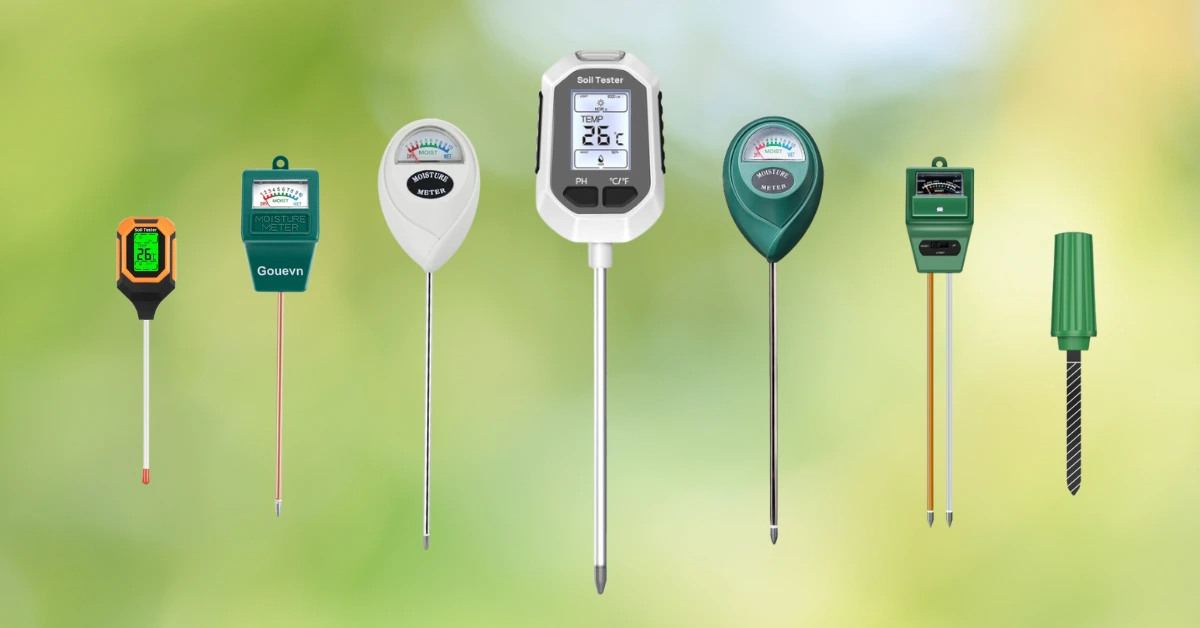
In this guide, I’ll walk you through the best soil moisture meters you can get for under $40 (yes, you can get quality ones without breaking the bank). We’ll compare analog, digital, and smart options so you can pick what fits your indoor garden style.
Whether you’ve got a windowsill jungle, a tiny vertical garden on your balcony, or a full indoor grow setup, these 7 best soil moisture meters under $40 will help you monitor your plants instead of butchering them.
Table of Contents
ToggleDo You Actually Need a Soil Moisture Meter for Your Indoor Plants?
Watering is where most people mess up. You can’t see under the soil, and the finger test is often wrong.
Here’s what a moisture meter actually helps with:
- Avoid overwatering and root rot
Topsoil might look dry, but roots can still be soaked. That’s how yellowing starts. The meter shows you what’s happening where it counts, at the roots. - Catch hidden dryness
Some plants stay perky even when the lower soil is bone dry. The meter helps you spot it before damage sets in. - Stop guessing
No more “should I water today?” moments. You get a reading, you know what to do. - Save water
I watered 30–40% less just by checking first. Lower bills, healthier plants, especially in dry rooms or apartments. If your indoor space gets little natural sun, grow lights can help stabilize your watering cycle.
Heads up: these tools aren’t perfect. They measure electrical conductivity, which can be thrown off by compact soil or fertilizer salts. Use them for direction, not decisions.
How to Choose the Best Soil Moisture Meters
Don’t pick a soil moisture meter based on price alone. Here’s what actually matters if you want a meter that works and lasts.
Type & Features
Analog = no battery, basic moisture reading.
Digital = battery-powered, may show temp/light.
Smart = syncs with apps for remote tracking.
What It Measures
Some meters show just moisture. Others add light, temperature, pH, or humidity.
The more data you get, the better you can adapt watering and placement, not just guess.
Probe Length
Short probes (5–7 in) are great for pots and houseplants.
Longer probes (10+ in) work better in big containers or deep beds.
Durability & Accuracy
Reliable meters give consistent readings.
Look for clear displays, sealed tips, and solid build.
Choose a soil moisture meter that fits your pot size, reads accurately, and doesn’t fall apart in damp soil. The best soil moisture meters use stainless steel or sealed probes and give you real data, not another “dry or wet” guess.
And now to the best soil moisture meters that will help you stop guessing and start understanding your plants’ needs.
TL;DR Best Soil Moisture Meters Comparisson Table
Pick
Type
Reads
Probe Length
Check On
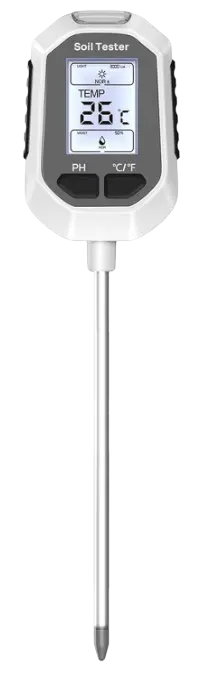
Best Overall: YAMRON 4-in-1 Digital Soil Meter
Type
Digital
Reads
Moisture, Light, Temp, pH
Probe Length
~7 in
Buy on
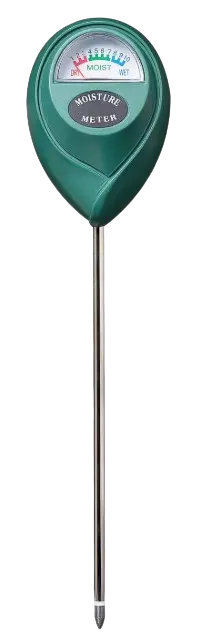
Best Analog: XLUX Classic
Type
Analog
Reads
Moisture only |
Probe Length
~7 in (longer probe 12–14 in)
Buy on
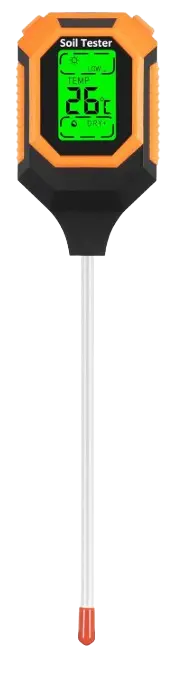
Best Multi-Reader: IRTOV 4‑in‑1 Digital Meter
Type
Digital
Reads
Moisture, Light, Temp, pH
Probe Length
~7.7 in
Buy on
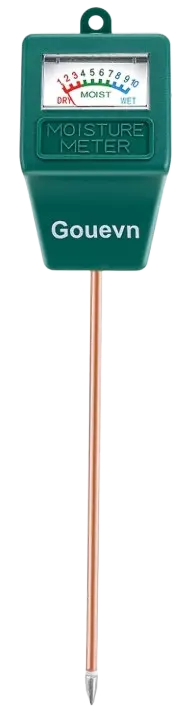
Best Budget: GOUEVN Soil Moisture Meter
Type
Analog
Reads
Moisture only
Probe Length
~7.7 in
Buy on
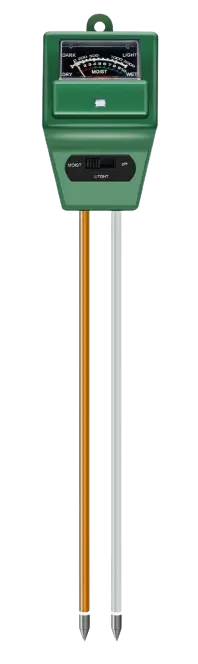
Best Basic 3-in-1 Meter: SONKIR 3-in-1
Type
Analog Hybrid
Reads
Moisture, Light, pH
Probe Length
~7.9 in
Buy on
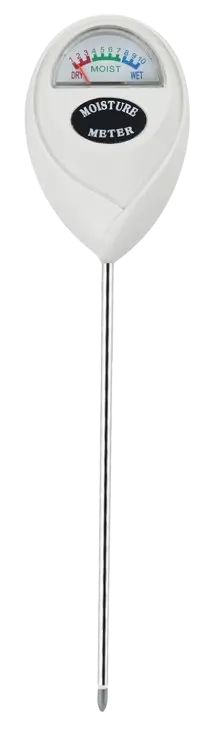
Best Passive Monitor: CENSINDA
Type
Analog
Reads
Moisture, Humidity, Temp
Probe Length
~6.7 in
Buy on

Best Smart Pick: THIRDREALITY Sensor
Type
Smart
(Zigbee)
Reads
Moisture, Light, Temp
Probe Length
~3.5 in
Buy on
*Probe lengths are approximate based on manufacturer listings or third-party measurements.
That gives you a rapid overview. Scroll down for full profiles, “best for” breakdowns, and pros and cons to help your indoor plants thrive.
7 Best Soil Moisture Meters For Indoor Plants You Can Buy Today
1. Best Overall: YAMRON 4-in-1 Digital Meter
- Multi-metric
- Backlit LCD and rotating head
- Fast response (~10 seconds)
- It doesn’t store data or sync with an app
Type
Digital, battery-powered
(4 × AAA)
Reads
Moisture, Light, Temp, pH
Probe Length
~7 in (17.8 cm)
Why it’s useful indoors:
Tracks moisture, temp, light, and pH, so you can adapt watering and placement in rooms with inconsistent light or HVAC
I used the 4‑in‑1 digital meter across three plant pots (a fern, a pothos mix, and a succulent) for a week. I compared its moisture readings with my own “lift the pot & compare weight before/after watering” method, as well as a spare analog meter I had.
The readings were generally consistent within ±1–2 moisture units (most meters use a 1–10 scale, where 1 is bone dry and 10 is soaking wet), and I caught a case where I almost overwatered the fern; the meter showed it was still “moist” before I watered again, so I held off and avoided soggy roots.
I skipped a watering that would’ve drowned my fern, and that single save paid for the meter.
This model is strong for people who want more insight than just moisture, especially when juggling humidity, light levels, and temperature in small indoor gardens.
2. Best Analog Pick: XLUX Soil Moisture Meter
(Classic Analog)
- No battery or settings hassle
- Intuitive color-coded dial
- Minimal disturbance, only one probe
- Relatively shallow probe
Type
Analog, no battery
Reads
Moisture only
Probe Length
~7 in (17.8 cm)
Why it’s useful indoors:
A no-battery, instant-read meter that helps avoid guesswork when topsoil looks dry but roots are still wet
This classic analog moisture meter is your “plug‑and‑read” option: no batteries, no apps, just real feedback. It gives you a direct sense of whether your plant’s soil is too dry, just right, or soggy — helping you water smarter, not harder.
I used it on four typical indoor pots (succulent in a small pot, pothos in a medium mix, snake plant in a taller pot, peace lily) over the course of a week. Each evening, I compared its moisture reading with my “lift the pot & feel weight” method, and correlated it with my alternate analog meter.
The XLUX stayed consistent, catching when I almost overwatered my peace lily (it showed “moist” even though the top inch was dry). In short, it gave me trust in watering decisions I would otherwise hesitate over.
This one earned its keep when it stopped me from soaking my peace lily just because the topsoil felt dry.
Note: If you have deeper pots or want to reach further into the soil, there’s a long‑probe version (same XLUX brand) with extended reach. Check it on Amazon.
3. Best Multi-Reader: IRTOV 4‑in‑1 Digital Meter
- Multi-metric
- Backlit display & memory hold
- Auto power-off saves battery life when unused
- More complex and possibly more fragile than simple meters
Type
Digital, battery-powered
(3 × AAA)
Reads
Moisture, Light, Temp, pH
Probe Length
~7.7 in
(19.5 cm)
Why it’s useful indoors:
Combines moisture, light, pH, and temp, ideal if you’re monitoring plant stress in small indoor grow setups
This digital meter gives you a solid mix: it doesn’t just tell you soil moisture, it also reads light, temperature, and pH. It’s a step up if you want more insight without going full smart. It’s a smart pick in the plant moisture meters category thanks to its multi‑metric insight.
I used this meter across four different indoor pots (a fern, pothos, aglaonema, and trailing ivy) over ten days. Each time I compared moisture readings to my weight‑based check (lift the pot before/after watering) and to the XLUX analog. The 4‑in‑1 meter stayed within ±2 units for moisture, and its light/temperature readings helped me detect that one plant was getting too little light in a corner. The pH reading was “meh” in one test, but gave me a ballpark when I repotted into a fresh mix.
Verdict? More data, less doubt, especially when my ivy started struggling and this meter pointed to light, not water.
Want more control over root health? Pair this with a soil thermometer for temperature tracking.
4. Best Budget Pick: GOUEVN Soil Moisture Meter (Reliable Readings Under $10)
- Very affordable
- Good probe length
- No battery or calibration fuss
- Only measures moisture, no extra data or metrics
Type
Analog, no battery
Reads
Moisture only
Probe Length
~7.7 in
(19.5 cm)
Why it’s useful indoors:
Simple moisture-only meter that’s reliable and cheap, great for small pots on shelves or window sills
Looking for a soil moisture meter that works without draining your wallet? The Gouevn analog meter gives you good functionality for a low cost. It’s perfect if you want plant moisture meters on a budget, but still workable for indoor gardening.
5. Best Basic 3-in-1 Meter: SONKIR MS02 3-in-1 Soil Moisture/ Light/pH Meter
- Triple functionality: moisture, light, and pH
- Ready to use (no batteries needed)
- Probe length gives deeper reach in many indoor pots
- Less precise compared to dedicated tools
Type
Analog/hybrid (no battery)
Reads
Moisture, Light intensity, pH
Probe Length
7.9 in
(~20.1 cm)
Why it’s useful indoors:
Gives you a basic read on water, light, and pH, enough to fine-tune conditions in mixed plant setups
This meter bridges the gap: it gives you moisture and light, and pH in one analog dial. For indoor gardeners looking to get more context (beyond just “is it dry?”), this meter gives multiple data points without going fully digital.
Want to go deeper than pH? Learn how to use a soil nutrient sensor to monitor your plant’s health.
6. Best Passive Monitor Meter: CENSINDA Soil Moisture/Hygrometer Monitor
- Easy and low maintenance
- Decent probe length for most indoor pots
- Reads fast, you get the moisture reading almost instantly
- No extra metrics (light, temperature, pH)
Type
Analog (battery-free)
Reads
Moisture
Probe Length
~6.7 in
(≈ 17 cm)
Why it’s useful indoors:
No batteries, quick moisture reads, and steady feedback, perfect for regular checks without any setup
This meter is less about flashy features and more about giving you consistent environmental feedback. It’s ideal if you want soil moisture meters that also monitor humidity/soil conditions, a solid “monitor meter” for indoor gardeners who want more context.
7. Best Smart Soil Meter: THIRDREALITY Zigbee Soil Moisture Sensor
- Truly smart app-based monitoring
- Multi-metric
- Low power usage
- Capacitive sensor (better accuracy and less corrosion)
- Requires Zigbee hub, won’t work with Wi-Fi or Bluetooth-only setups
- No physical display
Type
Smart sensor with Zigbee 3.0 connectivity
Power: 1 AA battery (included)
Reads
Moisture, Light (Lux), Temperature (C°/F°)
Probe Length
~3.5 in (~9 cm) insertion depth
Why it’s useful indoors:
Monitors moisture, temp, and light in real-time, and lets you automate watering or get alerts without even opening the pot
If you’re building a smart garden system with Zigbee (not Wi-Fi), or just want to monitor your soil moisture from your phone, the THIRDREALITY Smart Soil Sensor is one of the best smart soil moisture meters under $40. With Zigbee integration, it doesn’t just measure soil moisture; it gives you remote access to light and temperature data as well.
Want the full overview of smart plant tech? Start with our Smart Gardening Ultimate Guide to see how sensors, lights, and automation work together.
This is the meter to get if you already use SmartThings or another Zigbee hub, or if you’re planning to automate your plant care. It’s not for everyone, but for smart-home users, this is one of the best soil moisture meters you can get under $40.
If you’re juggling dozens of pots or travel often, this smart plant sensor is your silent plant sitter.
If none of the best soil moisture meters above quite fit your style, or if one is out of stock, here are 3 honorable mentions worth considering instead, still solid choices in the world of soil moisture meters.
Best Soil Moisture Meters: Honorable Mentions
Meter
Type
Reads
Probe Length
Check On
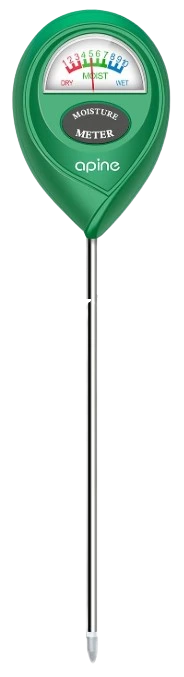
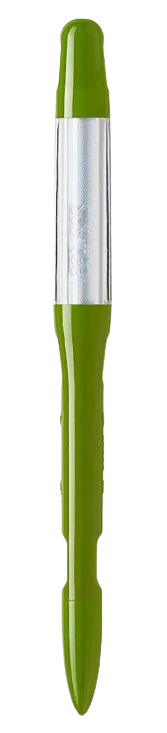
Sustee Aquameter
Type
Passive
(no battery)
Reads
Moisture only
Probe Length
~4.7–10 in
Check On
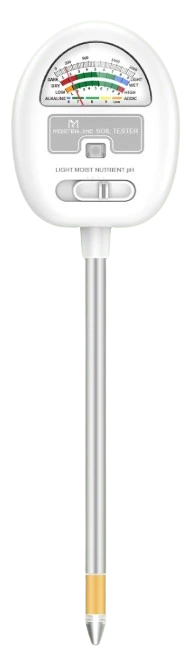
Moistenland 4-in-1 Digital Soil Meter
Type
Digital
Reads
Moisture, Light, Temp, pH
Probe Length
~7 in
Check On
Still unsure?
- Want a visual, leave-in cue? Go Sustee.
- Need dual insight (moisture + pH)? Pick Apine.
- Want full digital data for all metrics? Go Moistenland 4-in-1 Meter.
Whichever you choose, just make sure it’s one you’ll actually reach for each week; that’s what makes the difference.
The Best All-Around Soil Moisture Meter for Indoor Use
If I had to pick one meter, I’d go with Amazon’s YAMRON 4-in-1 Digital Moisture Meter.
Here’s why:
- Measures moisture, light, temperature, and pH in one tool
- No need to juggle multiple meters or guess based on topsoil
- In testing, it gave consistent readings within ±1–2 units and stopped me from overwatering a fern when the soil looked dry but wasn’t
- Helps adjust care based on seasonal shifts like low winter light or HVAC heat
- Still under $40 and feels solid, not like a cheap gadget
If you want a battery-free backup or just a simpler tool, Amazon’s XLUX analog meter is your best bet. For deeper pots, grab the long-probe version.
Pick a meter that fits your setup, then pair it with decent soil and proper drainage. The meter helps you water better, but you still need to pay attention.
Tips for Using Soil Moisture Meters in Indoor Pots
A soil moisture meter is a tool, not a fix. Use it wrong, and you’ll still overwater or underwater.
Here’s how to get reliable readings:
- Insert at the Right Depth: Push the probe in half to three-quarters of the way into the pot, not all the way down. Avoid rocks or roots to prevent bending the probe.
- Wait Before Reading: Give it 30–60 seconds after insertion. That allows the sensor to register surrounding moisture.
- Don’t Leave It in the Soil: Leaving the meter in the soil all the time causes corrosion. Test, then wipe clean and store.
- Check Multiple Spots: Moisture isn’t even. Test near the root ball and near the edges to get a full picture.
- Use the Lift Test Too: Meters aren’t perfect. Lift the pot, dry soil is lighter. Trust your hands as well as the meter.
- Watch for Salt Buildup: Hard water and fertilizer can throw off readings. Flush the soil now and then to reset.
- Build Your Own Baseline: After watering, check the meter. Do it again when the soil’s clearly dry. That helps you understand what “wet” and “dry” look like in your setup.
- Read in Context: A “moist” reading in a cold, dark room may still mean your plant needs less water. Factor in light, temp, and pot size. Light levels impact how quickly soil dries. Use a plant light meter to get the full picture.
Treat the meter as a tool, not a solution. It only works when combined with good habits.
Choose The Best Soil Moisture Meter & Water With Confidence
Finding the best soil moisture meter under $40 isn’t just about extra features; it’s about watering with confidence. Whether you go analog or digital, the right soil moisture meter takes the guesswork out of plant care.
A reliable soil moisture meter helps you avoid overwatering, catch dryness before damage sets in, and build better watering habits over time.
Measure. Check. Water right. That’s how you grow healthy indoor plants.
Looking for plants that clean your air, too? Don’t miss our guide to the Best Air-Purifying Indoor Plants, perfect for testing your new meter in action.
Frequently Asked Questions
Are soil moisture meters accurate?
They provide relative estimates, not absolute perfection. Their readings depend on soil type, salts, compaction, etc., so use them as a guide.
Can a moisture meter damage plant roots?
Yes, if you force it in or probe through major roots. Insert gently and avoid hitting rocks or root masses.
Can I leave the meter in the soil all the time?
No. Leaving it permanently can corrode the probe or distort readings. Use it to test, then remove and clean.
How deep should I insert the probe?
Aim for about half to three-quarters of the pot depth, or around the root zone, but avoid hitting the bottom or compacted soil layers.
How often should I check soil moisture?
Every 7–10 days is a good baseline. Smaller pots dry faster, so check more often; larger ones less so.